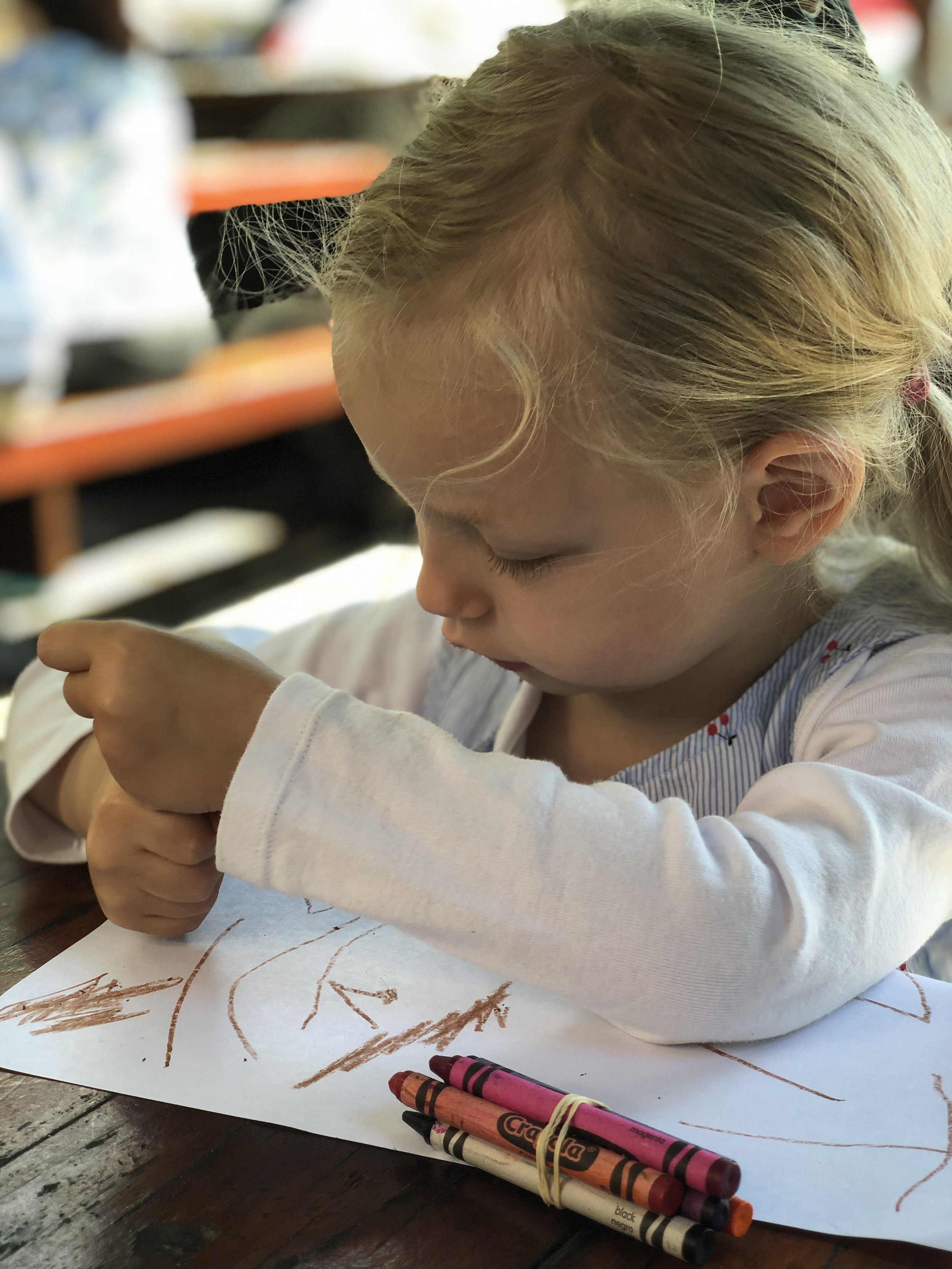
Writing Before Reading
To put it mildly, Mathilde and I had quit our Language Arts journey, and you can hear more about it in this video: Our Language Arts Journey.
Now I have Madison and she is growing and learning so fast in that cute pre-school age— we have begun playing with letters and sounds and I started questioning how I should approach reading and writing with her. I realized that back with Mathilde it simply didn’t make sense to me to sit and sound out letter combinations that weren’t actual words—and even more so, it didn’t make sense to Mathilde either. We initially followed the mainstream education approach, where children are typically introduced to reading first, decoding letters and sounds before putting pen to paper. However, I found that the Waldorf approach takes a different path—one that aligns more closely with how children naturally develop. In a Waldorf-inspired setting, writing comes before reading, allowing children to form a deep and meaningful connection with letters before they are expected to recognize them in text.
This approach makes so much more sense to me — the approach is rooted in the understanding that young children learn best through movement, imagination, and storytelling. Before abstract symbols (letters) can hold meaning, they must come alive in a child’s world. Writing first engages a child’s body and senses, making literacy a process of discovery rather than memorization.
The Waldorf method of introducing writing before reading allows children to experience literacy in a way that feels organic and joyful. Instead of approaching language as a set of rules to memorize, children discover it as an unfolding story, one that they are actively part of. This approach nurtures both their intellect and their imagination, creating lifelong readers and writers who feel at home in the world of words.
However, I will still introduce letter puzzles, letter play, and coloring pages with letters to increase Madison’s ability to recognize the letters. Also compared to Waldorf I am starting much earlier than traditional Waldorf — in Waldorf literacy is usually not thought til after the age of 6 - when the child has lost his or hers first tooth— my approach is to follow Madison’s own rhythm and interest, she loves reading and find letters interesting, so we play with wooden letters, read ABC-books, and just enjoy letters for now. I will not use flash cards or push letters on her in anyway, but just meet her interest gently and enjoy our little letter games and books for now.
Do you follow a Waldorf-inspired approach in your homeschool or classroom? I’d love to hear how your children respond to learning letters through art and storytelling!